"Is it halal?" is one of the questions we hear most often at Deshi Dine. Muslim visitors to Budapest ask it, and so do friends who are simply curious. Halal is about much more than a sticker on a door. Here is a simple, honest guide to what the word means, how it applies to a restaurant kitchen, and how to eat with confidence while you are in Budapest.
What does "halal" actually mean?
Halal is an Arabic word meaning "permitted" or "lawful". Its opposite is haram, meaning "forbidden". In Islam the idea covers the whole of life, but most people use it for food: what a Muslim may eat and drink, and how that food must be prepared.
Most food is halal by default. Fruit, vegetables, grains, lentils, milk, eggs and fish are all permitted. The rules matter most for meat and for a few ingredients that are always forbidden.
The main rules, in plain words
- No pork, and nothing made from pigs. That includes lard, pork gelatine and some sausage casings.
- No alcohol as a drink or as a cooking ingredient. That includes wine in sauces.
- Meat must come from permitted animals, such as chicken, beef, lamb, mutton or goat, and the animal must be slaughtered in the correct way, called zabiha.
- Blood must be drained from the meat, because consuming blood is not allowed.
- No contamination: halal food must not touch haram food, utensils or oil.
Why the kitchen matters as much as the meat
A restaurant can buy halal meat and still serve food that is not truly halal. It happens when the same grill, fryer, chopping board or ladle is also used for pork, or when a sauce is finished with wine. Real halal cooking means the whole process is clean, from the supplier to your plate.
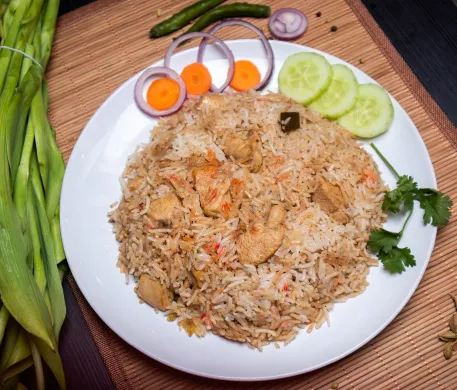
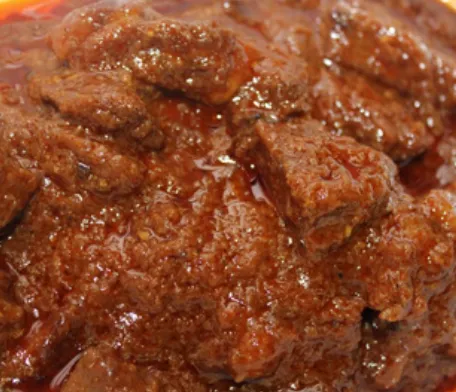
In our kitchen at Deshi Dine, all the meat we cook is halal, and we never cook pork. Every curry, biryani and bhuna is made to order, and our cooks know why the details matter. Most of them grew up eating exactly this food.
Common hidden ingredients to watch for
If you are eating somewhere new, these are the ones that catch people out:
- Gelatine in desserts, sweets and some yoghurts. It is often made from pork unless the label says otherwise.
- Wine, beer or spirits in sauces, stews, marinades and some desserts, such as tiramisu.
- Lard or bacon fat in pastry and traditional dishes. Hungarian cooking, for example, often uses zsír (lard).
- Shared fryers, where chips are fried in the same oil as pork schnitzel.
- Flavourings and extracts made with alcohol, such as some vanilla extracts.
Tips for eating halal in Budapest
- Ask directly. "Is the meat halal, and do you cook pork in the same kitchen?" A good restaurant will give you a clear answer.
- Learn two Hungarian words: sertés means pork, and disznó means pig. You will see them on many menus.
- Choose fish or vegetarian dishes when you are unsure. Hungarian vegetable stews (főzelék) and fish soup (halászlé) can be good options, but ask whether they contain any meat stock or pork fat.
- Read labels in shops. Look for "sertés", "zselatin" (gelatine) and "alkohol".
- Find the halal places. Budapest has a growing number of halal restaurants, butchers and Asian grocery shops, especially around the 7th and 8th districts.
Halal is also about honesty
For many Muslim families, halal is about more than rules. It is about trust and cleanliness, and about food that is good and wholesome (in Arabic, tayyib). Guests should never have to wonder what is on their plate. That is the standard we hold ourselves to.
Whether or not you keep halal, we hope this helps you understand the care behind a halal kitchen. If you have any question about a dish, its ingredients or allergens, just ask our staff. We are always happy to explain.
Taste it at Deshi Dine
Bangladeshi and Indian home cooking, 100% halal, made to order on Dob utca 53, Budapest. Open every day 11:00–23:00.